

You never truly know how strong you are until life leaves you no other choice. I’ve lost many friends and mentors to cancer over the years, and if I’m being honest, it was the one thing I prayed would never touch my life. I lived healthy, had no family history, and carried this quiet hope that I would never have to fight that battle.
Growing up in Trinidad, I often heard the saying, “Fools make plans and God laughs.” I never understood the weight of those words until now. This is my story.
My symptoms started showing up around the time I became a teenager. But because I had just started menstruating and my parents had recently divorced, everything was blamed on “depression.” I was put on antidepressants—though I wasn’t actually depressed—and those medications made me suicidal. Instead of raising red flags, that side effect to the drug only seemed to confirm the depression diagnosis.
When I moved to the U.S. at 14, I kept going to doctors because the symptoms never stopped. But every time, my labs came back “normal,” and I was told to sleep more, eat better, and just relax. While I 100% agree that rest is important for your body, you can’t sleep off everything.

At 22, during the first trimester of my pregnancy, I took a nap and woke up to find my thyroid gland visibly swollen. That moment was the first time I finally understood the source of years of misery. The doctors in Paris recommended that I have an abortion and remove my thyroid gland immediately because, according to the GYN, “there’s no point in bringing a child into this world to die.”
I flew back to the U.S. during my second trimester for a second opinion. Navigating care in Paris had been terrifying—I didn’t speak French, certainly not the medical terminology, and the doctors spoke only limited English. I had far more questions than the language barrier could handle, and I wasn’t willing to end a pregnancy—especially one where every scan showed a perfectly healthy baby—without clearer answers. especially when all the tests kept coming back inconclusive.
In New York, I met with my PCP and GYN, and both assured me that thyroid cancer was highly curable, unlikely to spread quickly during pregnancy, and that it was safe to carry my baby to term before having surgery. Their confidence gave me enough peace to return to Paris, finish my pregnancy, and plan to address everything after my baby was born.
But life had other plans again. Just a short time after giving birth, I unexpectedly moved back to the U.S. While this was a relief to have my family for support and have home court advantage where I spoke the language, there were new obstacles to overcome. For example, I didn’t have an ENT lined up for surgery in the US. This is probably where I make the biggest mistake in my journey. I should have been more diligent in selecting an ENT and treatment facility. If you take one piece of advice from this blog with you, when it comes to cancer, where you get treated makes a big difference.
At 23, I had a hemi-thyroidectomy, and the testing on the removed tissue showed that the tumors were benign. Because of that, the surgeons left me with the remaining half of my thyroid—even though it also had nodules. After my surgery, all the symptoms I’d struggled with for years suddenly disappeared. I truly believed I was finally better. The shortness of breath was gone, my heart rate stopped spiraling, my metabolism stabilized—everything that once felt out of control finally felt normal again.
I still had moments where the old symptoms crept back in, but life was always hectic, and every doctor I saw blamed it on stress. My thyroid labs kept coming back “normal,” so my concerns were dismissed again and again. Normal numbers do not mean things are normal. I know what my body’s normal feels like and I should have trusted my intuition better when things felt off.
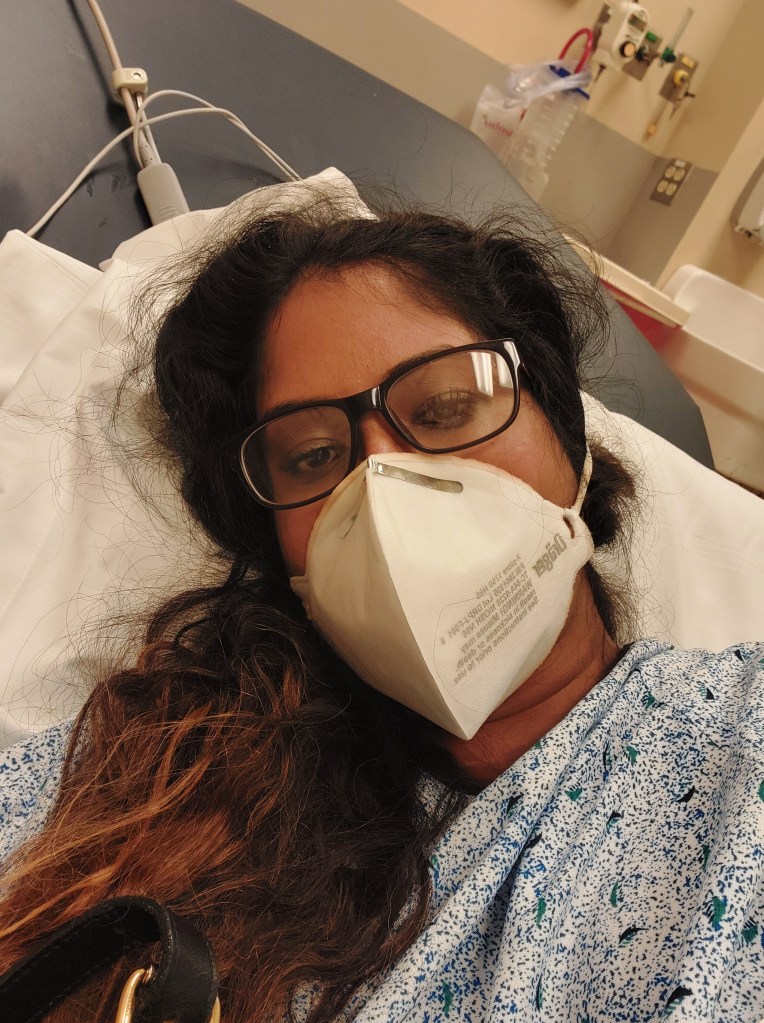
Well I tried my best until I literally couldn’t get myself out of bed. My energy levels plummeted so bad that I would literally lay on the floor on the way to bed from the bathroom and take a nap, my blood pressure would spike and come back down within 20 minutes. Hot flashes would hit me so intensely that I’d be standing outside in a t-shirt knee deep in snow. I couldn’t climb a single flight of stairs without losing my breath and feeling my heart skip a beat. Every simple task had become a battle.
The doctor sent me to the ER, worried that I might have a stroke. They ran every test they could, and every single one came back normal. They couldn’t give me anything to control my blood pressure because it would drop faster than the medication could even take effect—and my thyroid hormones were still within the normal range. In the end, they decided it was viral and sent me home with instructions to “sleep it off.”
But I couldn’t sleep it off. I didn’t get better. So I learned to push through. If all the tests said I was healthy, then my body should be able to function, right? While my body screamed for care, I pushed it to the absolute limit—taking care of my kids, my ailing mother, and managing our homestead, which at the time had about 100 animals.
Honestly, that day in the ER, I knew in my heart what was really happening—but I couldn’t accept it. I told myself that if I pushed through and got back to “normal,” maybe it wouldn’t be real. Maybe I could believe the beautiful lie that it was just a viral infection. The truth is, a little piece of my soul died that day. I was alone, the doctors had no answers, and I didn’t think I’d ever find someone who could fix me.
So I sucked it up and kept going. My mother was battling pancreatic cancer, and I knew she wouldn’t be at peace if she found out I had cancer too.What if I started treatment and became too sick to take care of her? But most importantly my kids—about to lose their grandmother—needed me to be strong for them. Six months later, my mom passed away without knowing the truth, and I held strong for my kids together.
I started calling doctors, only to discover the agonizing reality: getting an ENT appointment takes an ungodly amount of time. The earliest I could get was six months out. I had just watched my mom die nine months after her diagnosis, and now, six months after that ER visit, I finally got around to making calls for myself. At this point, all I knew was that my nodules had grown significantly. While benign nodules—according to the results from my hemi-thyroidectomy—are unlikely to become cancerous, my new PCP was concerned about their growth and my worsening symptoms, and therefore insisted on a biopsy.
I called one of my friends who worked in the medical field and he told me “you are going to get off the phone with me and call Memorial Sloan Kettering and you will say whatever it takes to get an appointment with them. If you have cancer, there’s not one better in the tri-state area to treat you.” This bit of advice probably saved my life.
My initial biopsy at Memorial Sloan Kettering came back negative for cancer but when it comes to being through, Memorial Sloan Kettering does it best. In addition to requesting the biopsy, the ENT that treated me requested ALL files and samples from my surgery at Mercy hospital and had them retested. It is standard policy at MSK to not accept test results from any other facility, they literally redid all the blood works my PCP had ordered 3 weeks earlier because they didn’t trust the results. They looked at the tissue sample removed during my hemi-thryoidectomy eight years earlier. I remember the ENT not wanting to give me the results because I was alone, but I already knew because I saw the result in my patient portal and understood my test results. From the sample removed during my earlier thyroid surgery I was diagnosed with high grade cancer. High grade means fast spreading and to find out that it has been in you for more that 8 years is very scary.
It doesn’t matter how “curable” thyroid cancer is—when you hear you’ve had high-grade cancer for almost a decade, just three months after the strongest person you know succumbs to cancer, your mind immediately jumps to one conclusion: it’s game over. How could I, someone who has always felt so frail, survive something my literal hero could not? I watched cancer destroy her mind, body, and spirit in mere months. The next month I faked a smile every time someone said “you’re going the beat this”, the words wounded me deeply, because to me it was a beautiful like. One we say to someone battling cancer as easily as have a good day. Truth is you don’t know if they wind up having a good day, and you have no idea if they’re going to beat cancer. It’s empty encouragement that only reminded me that I was dying. That’s all I thought for the first month, I’m going to die, this is it, I wasted my whole life, I would never be happier than the happiest memories I already had. Were they happy enough to signify a life well spent? Was I happy more than I’ve been sad during this life that I life? Who will love, support and comfort my kids in my absence?
Yes, I know pancreatic cancer is a completely different demon with the odds stacked against it—but sometimes fear doesn’t listen to reason. Was I dramatic, probably but I had to let myself feel the fear because it drowned out the grieve of losing my mother and that I still wasn’t able to deal with. It was easier to face every imaginable but the bitter truth was that it all led back to her. I would be able to die without worry if I knew she would be there to take care of my kids.
My only goal now was simple: survive for as long as I could, make as many memories with my kids as possible, and help them become as self-sufficient as I could.Well as usual the forces that be did not care for what I feared or planned. My ENT was swift, methodical, and didn’t waste a single minute. I was scheduled for a full-body scan the very next week. At the time, I was living in Pennsylvania, seeing the ENT at MSK in Manhattan, and driving to New Jersey for the testing. There was no waiting for a “convenient” time—we were moving as fast as possible, by any means necessary. Fortunately, both my ex and I were working remotely, which made the logistics possible without missing too much work—something that may seem trivial, but with kids to support, every hour counted.
Then, finally, we got some good news—a sliver of hope in what felt like complete despair. Against all odds, the cancer had remained local to my neck. The doctors were baffled. My ENT looked at me and said, “We have no idea how you’re not riddled with cancer. The fact that you’re sitting here like nothing is wrong, coming and going on your own, is unbelievable.”
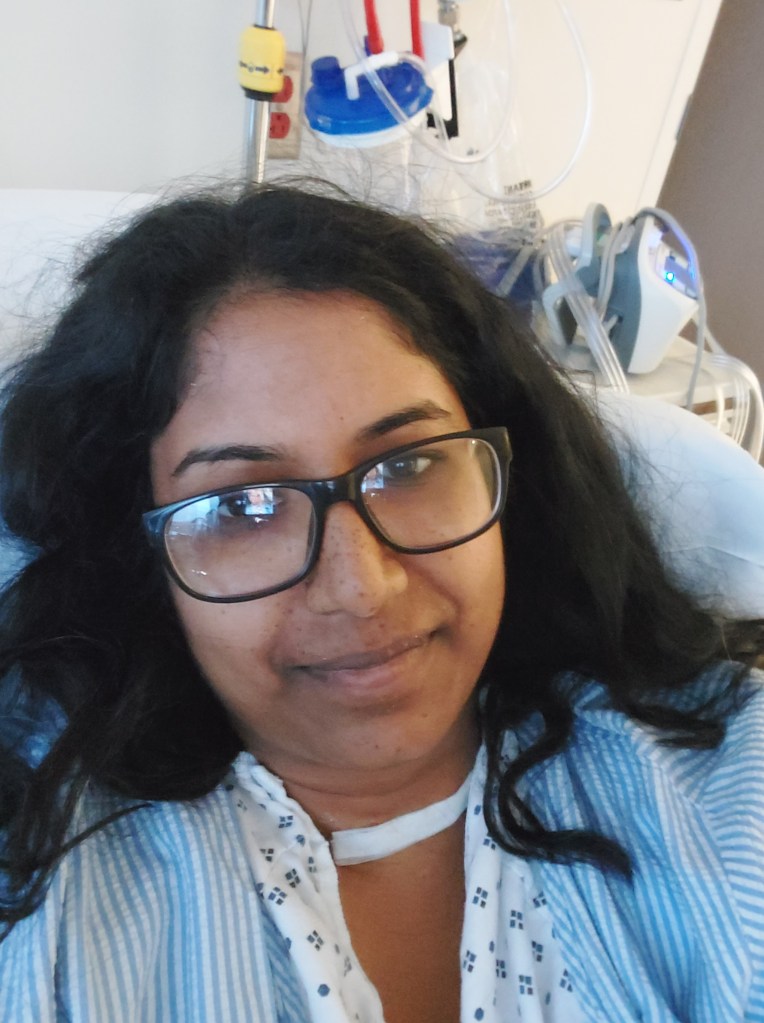
I was scheduled for surgery the following week, assigned an endocrinologist, and the treatment plan started falling into place. Things were finally moving. But as I looked at my kids—still so young—the words of that GYN in Paris echoed in my mind. The world is terrifying, and the thought of leaving my children alone in it felt like the worst fate imaginable.
The truth is, I didn’t care whether I lived or died. What I couldn’t do was let my children feel the pain of losing their mother—a pain I knew far too well, one that was still raw within me. At this point, it had only been four months since my mom passed away. Between trying to be strong for everyone else and scrambling to get diagnosed and treated, I never found the time to grieve. I just pushed it all down, saving the heartbreak for another day.
The world can be cruel, and I needed to be here to help my kids learn how to navigate it. Their first crush, their first heartbreak, their first job—learning to cook, clean, budget, and build a life. Could they figure it out on their own? Yes. But learning through failure is painful, and I didn’t want my children to have to grow through suffering. I needed to stay alive long enough to guide them into adulthood.
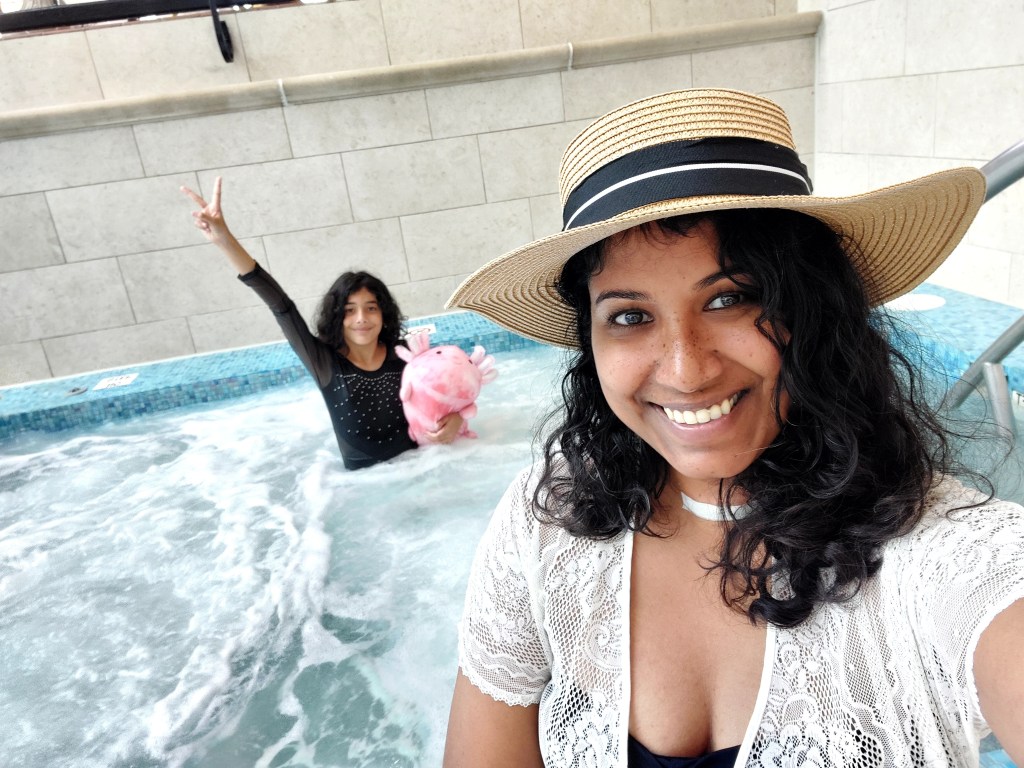
Following my endocrinologist’s advice, I underwent additional treatment to ensure no microscopic traces of cancer were left behind. Five months after my surgery, I was officially declared cancer-free.
And that’s when the floodgates opened. I had been running on adrenaline for so long, pushing through every moment without allowing myself to truly feel. Suddenly, all the fear, panic, regret, and relief came crashing over me at once.
I had been given a second chance—a new beginning in every sense of the word. My body hadn’t felt this good since before I was a teenager. No more irregular heartbeats, no more hot flashes, no more shortness of breath. I felt alive again. Truly alive.
But then came the question: what life do I want now?
When you believe you’re about to die, you suddenly see all the ways you’ve settled, all the time you’ve wasted, all the dreams you pushed aside. And now, standing on the other side of it all, I had a blank canvas in front of me—and I finally held the brush. I could paint whatever dreams my heart desired.
You see, it wasn’t just about gaining new physical strength—my entire previous life had been erased. My marriage ended during treatment, I lost my home, my pets, most of my possessions, and even my job. The only things I truly have from my past life are my health and my children.
I do have my family, and though they are far away, they’ve been my emotional rock. But I am building a new life for myself and my kids—one block at a time, brick by brick, creating something stronger, more resilient, and more intentional than before.
Each day I move forward blessed with the most valuable lesson I have learned, one day you will not have the health to live a better life that you lived today, make take worth the time you’ve spent to live it.





 Skincare Unmasked
Leave a reply to Avani Rampersad Cancel reply