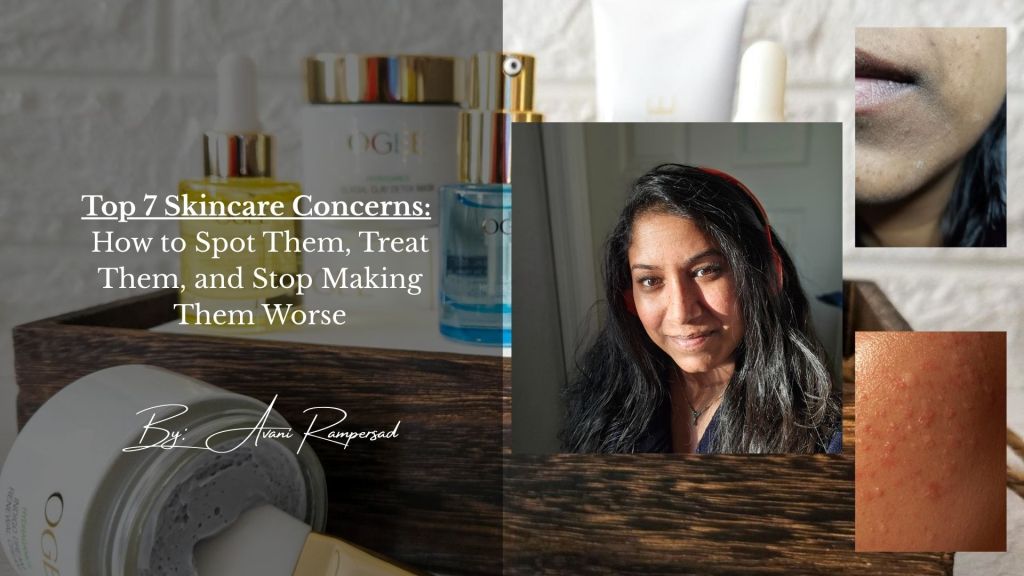

In my last blog we discussed the different skincare types and how to know what your skin type is. Now we will deep-dive and look at some common skincare concerns that may be affecting your skin.
Together these two blogs will help you understand how your skin functions and the problems that it is struggling with so you can put together a skincare routine that helps your skin function at it’s best!
If you do not know you skin type, please read this blog first.
In this blog we are breaking down the 7 most common skincare concerns in plain English—no confusing jargon, no over-hyped promises.
We’re going to explore:
1. Acne & Breakouts: The Most Frustrating Skin Struggle
Acne is one of the most common skincare concerns—and also one of the most misunderstood. Acne isn’t just a “teenage problem” caused by hormones. Adults deal with breakouts too, thanks to stress, diet, environment and yes… sometimes the very products you’re using.
If you’re seeing pimples, clogged pores, whiteheads, blackheads, or painful under-the-skin bumps, you’re dealing with acne-prone skin.
A big clue? Your breakouts keep coming back in the same areas, like your chin, cheeks, or forehead. This is not a one off flare caused by irritation. If you have acne you need to figure out your triggers:
- Clogged pores? Is it caused by the products you’re using or the environment?
- Hormonal? Are your breakouts correlated to your period cycle?
- If it’s recurring are your treating or curing your causes? ex are you killing acne causing bacteria or are you just getting rid of pimples when they appear?
The best ingredients for acne are:
– salicylic acid to clear pores,
-benzoyl peroxide to fight bacteria,
-and niacinamide to calm redness and control oil.
If you’re looking for products to treat acne, check out this list.
This website contains affiliate links. If you purchase through these links, I may receive a commission. This does not affect the price you pay and helps support the operation of this site. All opinions expressed are my own
What you don’t want to do is panic and attack your face with every harsh product you can find. Over-scrubbing, using super thick creams, or constantly picking at pimples will only make things worse (and leave scars behind).
2. Hyper-pigmentation & Dark Spots: The Marks That Won’t Leave
Ever had a pimple disappear… but leave a dark reminder behind? That’s hyperpigmentation. It can show up as acne marks, sunspots, melasma, or just general uneven skin tone. And unfortunately, it loves to stick around way longer than we’d like. If you notice brown or dark patches that linger for weeks or months, this is likely your main concern.
Hyper-pigmentation is cause by excessive melanin production. Your uneven skintone is the cause by various triggers signaling your skin to produce more melanin in certain areas.
There are 6 triggers that can cause your hyper-pigmentation:
- Sun exposure: you skin produces melanin to protect itself from UV rays, unfortunately your entire face does not receive the same amount of sun exposure evenly due to shadows, hats, etc which can result in your face having an uneven skin tone.
- Post-Inflammatory Hyper-pigmentation – anytime your skin experiences inflammation/ damage, it can respond by producing extra pigment as it heals
- Hormones can affect the amount of melanin your skin produces and factors such as pregnancy, birth control pills, hormone replacement therapy and thyroid imbalances can affect your skin.
- Drug induced hyper-pigmentation is when certain medications [some antibiotics, chemotherapy drugs, anti-seizure medications and hormonal treatments] make your skin more sensitive to sun light.
- Age: as you age, cell turn over slows down so pigment sticks around longer. Years of sun exposure can show up as: age spots, liver spots and general uneven tone.
- Genetics: some people are naturally more prone to dark spots than others.
How do I treat hyper-pigmentation?
Treating hyperpigmentation is 100% possible—but it takes the right combo of products, protection, and patience. There’s no single magic fix but rather a three-part strategy:
Protect → Correct → Maintain
Step one protect: if you suffer from hyper-pigmentation you want to make sure you are limiting your sun exposure or protecting your skin from the sun.
Step two correct: There are skincare products that will help you correct hyper-pigmentation and get you back to an even glowing tone. The ingredients you would want to include in your skincare routine would depend on the cause of your hyper-pigmentation.
Acne Marks (PIH)
- Niacinamide
- Azelaic acid
- Salicylic acid
- Gentle retinol
Sun Spots
- Vitamin C
- Retinoids
- Glycolic acid
- Professional peels/laser
Melasma
- Prescription treatments
- Sun protection
- Azelaic acid
- Tranexamic acid
The golden trio for treating dark spots is vitamin C, niacinamide, and retinol—plus daily sunscreen. If you’re looking for products to improve your hyper-pigmentation, check out these.
Now before you start this journey, let’s set some realistic expectations. You will not be seeing dramatic result quickly.
Depending on the severity of your hyper-pigmentation you will begin to see noticeable results:
- Mild marks: 4–6 weeks
- Deeper pigmentation: 3–6 months
- Melasma: often ongoing management
Step 3 maintain: Now that we understand what causes hyper-pigmentation and how long it takes to get your skin back on track, it is crucial that you maintain your skin to prevent the appearance of new dark spots. If you keep these steps in your daily skincare routine, your results should be lasting.
- Religious sunscreen use
- A consistent routine with brightening actives
- Patience and gentle care
- Professional help if needed
- Avoid picking at your skin or popping pimples
- Do not use aggressive treatments that can irritate your skin.
3. Fine Lines & Wrinkles: Aging Happens
Fine lines and wrinkles are caused by a combination of natural aging, environmental damage, and everyday habits. As we get older, our skin naturally produces less collagen and elastin—the proteins that keep skin firm, smooth, and elastic. Cell turnover slows down, skin becomes thinner, and natural oil production decreases. This gradual loss of structure and hydration is what leads to the development of fine lines that eventually deepen into permanent wrinkles.
What causes fine lines and wrinkles?
The biggest external cause of wrinkles is sun exposure. UV rays break down collagen and elastin in the skin, a process known as photoaging, which is responsible for the majority of visible signs of aging. Years of unprotected sun exposure lead to rougher texture, deeper creases, and earlier formation of lines around the eyes, forehead, and mouth.
Repeated facial expressions also play a major role. Every time you smile, squint, frown, or raise your eyebrows, the skin folds in the same places. Over time, those temporary expression lines become etched into the skin as permanent wrinkles, such as crow’s feet, forehead lines, and frown lines. These are known as dynamic wrinkles that eventually turn into static ones.
Dehydration can make fine lines more noticeable as well. When skin lacks moisture, it loses plumpness and flexibility, making lines appear deeper and more pronounced. While dehydration lines are not true wrinkles at first, chronic dryness can contribute to long-term skin aging if not addressed.
Lifestyle factors can significantly influence how quickly wrinkles form. Smoking damages collagen, reduces blood flow to the skin, and creates classic lines around the mouth. Poor diet, especially one high in sugar, can lead to glycation, a process that stiffens collagen and accelerates aging. Lack of sleep and chronic stress also interfere with the skin’s ability to repair itself, making wrinkles appear sooner.
Environmental stressors like pollution and free radicals further weaken the skin over time. These factors create oxidative damage that breaks down healthy skin cells and speeds up the aging process. Even things like blue light exposure and harsh weather conditions can gradually contribute to fine lines.
Finally, genetics play a role. Some people naturally have thicker, more resilient skin, while others are genetically more prone to developing wrinkles earlier. While you can’t control your genes, good skincare habits and sun protection can make a major difference in how and when wrinkles appear.
If this sounds familiar, it’s time to focus on prevention and repair.
How to fix fine lines and wrinkles with skincare?
This is where well-formulated skincare—and especially longevity-focused serums—can make a real difference. Products designed to support long-term skin health help strengthen the skin barrier and slow the visible effects of time. Retinoids, peptides, and antioxidants like vitamin C help support collagen and keep skin looking smooth and healthy. When used consistently, these ingredients improve texture, boost firmness, and help prevent fine lines from forming in the first place. Here’s a list of products I recommend to correct fine lines and wrinkles.
Genetics will always play a role in how we age, but smart skincare choices and daily protection can dramatically influence how early—and how deeply—fine lines and wrinkles appear.
4. Rosacea & Persistent Redness
Some redness after a workout, a glass of wine, or a hot day is totally normal. Redness that sticks around all the time? That’s a different story.
What is Rosacea?
Rosacea is a chronic skin condition that causes ongoing facial flushing, visible blood vessels, sensitivity, and irritation. If your skin seems to get upset easily—especially from heat, spicy foods, alcohol, or certain skincare products—you may be dealing with rosacea.
How to treat Rosacea?
The key with rosacea is to calm the skin, not overwhelm it. A gentle routine with soothing cleansers, fragrance-free moisturizers, azelaic acid, and mineral sunscreen can help reduce redness and keep flare-ups under control. If you’re looking for skincare products to soothe your rosacea, check out this list.
Anything harsh, heavily fragranced, or packed with strong actives can quickly make rosacea worse. Scrubs, drying products, and complicated routines are usually a recipe for irritation.
5. Enlarged or Clogged Pores
Too many make up vlogs later and some of us think that pores are an eyesore. Let’s clear something up right away: pores are completely normal. Every single person has them. But things like excess oil, buildup of dead skin, and plain old genetics can make them look bigger and more noticeable than you’d like. If your pores always seem visible—especially across your nose and cheeks—you’re not imagining it.
The good news? You can absolutely improve how they look. The best approach is keeping them clean and unclogged with ingredients like salicylic acid and retinol, which help clear out oil and smooth the skin over time.
What to avoid if you have clogged or enlarged pores?
What won’t help? Pore strips, aggressive scrubbing, over-cleansing, or piling on heavy makeup that just settles into them. Those are quick fixes at best—and irritation at worst. Ironically those are the products that are heavily marketed for dealing with clogged or enlarged pores.
When it comes to pores, think consistent maintenance, not instant miracles.
6. Dark Circles & Under-Eye Issues
We’ve all heard that we need our 8 hours of beauty sleep to get rid of those bags and dark circles under our eyes. But, sometimes no matter how much sleep you get, your under-eyes still look exhausted? If this is you, you’re not alone.
What causes dark circles?
Dark circles can come from a mix of genetics, allergies, dehydration, or simply having naturally thinner skin around the eyes. So sometimes it’s not about being tired at all—it’s just how your skin is built.
How to reduce bags and dark circles under your eye?
If puffiness and shadows are your biggest concerns, the right eye products can make a real difference. Caffeine can help de-puff, vitamin C can brighten, and lightweight hydrating creams can smooth and refresh the area. Check out this list of products for dark circles.
Just remember—the skin around your eyes is extra delicate. Stick to gentle formulas and skip anything harsh or heavily fragranced.
7. Dull, Tired-Looking Skin
Sometimes your skin isn’t breaking out or irritated—it just looks… blah. That flat, tired-looking complexion usually happens when dead skin builds up, hydration is low, or your routine just needs a little refresh.
How to get your tired dull skin to glow?
If you’re ready for a glow up then the key is gentle exfoliation and consistent hydration. Ingredients like AHAs—think lactic or glycolic acid—brightening vitamin C, and a reliable moisturizer can help bring your glow back without overdoing it. Check out this list of products I recommend for dull, tired looking skin.
What you don’t want to do is go overboard scrubbing or piling on harsh exfoliants. Trying to “scrub the dullness away” almost always backfires, leaving skin irritated instead of radiant.
The Big Takeaway: Most People Have More Than One Concern
Here’s a little reminder: your skin doesn’t have to fit neatly into just one category. Maybe it’s oily and sensitive. Or acne-prone and dehydrated. Maybe it’s aging while also dealing with dark spots. Totally normal.
The real secret to effective skincare isn’t piling on a million products—it’s figuring out your main concern and building a simple, consistent routine around it. Focus on what your skin actually needs, and everything else becomes extra.
A solid routine usually looks like this:
- A gentle cleanser
- One or two targeted treatments
- A moisturizer that seals in moisture
- A well balance diet with lots of water.
Great skin isn’t about chasing every new trend—it comes from understanding your skin and treating it with care. Take the time to figure out what your skin is truly dealing with, and you’ll save money, frustration, and a whole lot of trial and error.
Not sure where to start? Comment below and let’s figure out what your skin needs together.


 Skincare Unmasked
Leave a comment